
SPIRITISM
Definition
Allan Kardec, the inventor of the term “Spiritism,” defines it as a doctrine based on the existence, manifestations, and teachings of spirits. Spiritists believe in the possibility of establishing and maintaining relationships with the souls of the deceased.
In a broader sense, Spiritism refers to phenomena that are not yet explained, most often occurring through an agent known as a medium. Some followers regard it as a form of religion, while others see it as a science.
J.-B. M.-L. defines Spiritism simply as: dialogue with a thinking and intelligent entity.
History
Since the dawn of time, humans have sought to make contact with spirits. The 'fluidic double' that allows the spirit to manifest is not a modern hypothesis; it has played a role in most religions.
Since the dawn of time, humans have sought to make contact with spirits. The 'fluidic double' that allows the spirit to manifest is not a modern idea; it has played a role in most religions. The Vedas, considered the oldest texts of humanity, mention spirits whose god is Yama. In ancient Egypt, the ka refers to the vital energy and a spiritual double that is born with the human and survives after death.
Lucan, in The Pharsalia, explains that the chaste Phemonoe, the Pythia of the Temple of Delphi, when questioned by Pompey’s son, 'agrees to be penetrated by the God' (a phenomenon of mediumship) and dies when the God withdraws from her.
The origin of modern Spiritualism dates back to 1847. The events that gave rise to it took place in Hydesville, New York, in the home of Pastor Fox. His daughters, the youngest of whom was twelve, repeatedly heard knocks.
Using a simple alphabet, they established the first communications with the invisible. The spirit presented itself as the soul of a peddler who had been murdered in the house where it manifested and demanded a proper burial for his body, which was said to be buried in the cellar.
Upon investigation, bodies were indeed discovered in the Fox family’s cellar, along with a peddler’s bag.
What began as a mere 'family affair' gave rise to 'psychic' circles that formed throughout North America.
In 1848, the Fox family left Hydesville, praised by some and criticized by others, to settle in Rochester.
They then opened a clairvoyance practice and prospered by holding mediumship sessions that allowed grieving individuals to make (or imagine making) contact with their departed loved ones.
The events in Hydesville, along with similar occurrences observed elsewhere between 1848 and 1850, gave rise to an explosive movement.
Despite the Fox sisters’ retractions and questionable séances conducted by fraudsters, a new religion was born.
It crossed the Atlantic, spreading to Germany and then to France as early as 1853. 'Spiritualism' spread throughout Europe under the name 'Spiritism,' a term coined by Allan Kardec.
The Beginnings of Spiritism in France
In France, it is worth mentioning the experiments, as early as 1853, by de Gasparin and Rougemont, those of Victorien Sardou, as well as the work of the English scientist William Crookes, among others.
Victorien SARDOU (1831–1908), a playwright born in Paris, became acquainted with the spiritist phenomenon through his friend Goujon.
After telling him about an extraordinary experiment at the U.S. consul’s residence in 1851, Goujon introduced Sardou to spiritist circles, where he met Hippolyte Rivail (Allan Kardec).
As a medium, Sardou recounted his experiences in the English magazine The Grand Magazine in 1906, describing phenomena such as table-turning, the delivery of roses, and a piano playing by itself. He is also known for producing remarkable mediumistic etchings, such as The Celestial Dwellings of Bernard Palissy and works inspired by Mozart under their influence.
Passionate about the phenomenon, he helped popularize the idea of communication with spirits, even involving Empress Eugénie in his séances.
In 1900, he presided over the annual spiritist congress.

Allan KARDEC (1803–1869) took part in the séances organized by Victorien Sardou. He meticulously recorded the phenomena and Sardou’s observations, and gathered additional testimonies from various mediums. The synthesis of all this information, the result of an immense effort, was published in his first work, The Spirits’ Book, in 1857. It addresses fundamental themes such as God, the meaning of existence, life after death, reincarnation, and the laws governing these realities. The existence of God is further explored in his second book, The Genesis According to Spiritism, which was followed by The Book on Mediums.
Allan Kardec, born Hyppolite Rivail (Kardec being the name of a druid whose reincarnation he claimed to be), was the first to develop a true “Spiritist doctrine.” This doctrine stood apart from any single religion, yet united them all through its message of universal love.
He is regarded as the founder of Spiritism in France; his grave in Père Lachaise Cemetery is perpetually covered with flowers.
Among Allan Kardec’s successors were experimenters and authors such as Victorien Sardou, Léon Denis, and Gabriel Delanne.
Léon DENIS (1846–1927) played a significant role in the propagation of Spiritism.
Endowed with rare intelligence, he was forced to abandon his formal studies to earn a living. A self-taught scholar, he became an active member of Freemasonry.
At the age of eighteen, he read The Spirits’ Book, an experience he described as a revelation.
He met Allan Kardec and, alongside him and after his death, tirelessly worked to spread Spiritism with Gabriel Delanne and Camille Flammarion. Considered “the apostle of Spiritism,” he delivered numerous lectures across Europe at international congresses, even as his eyesight began to decline from 1920 onward.
Although he was destined to become completely blind, he is said to have been supported in his mission by spiritual entities, including Jerome of Prague and the “Blue Spirit.”
He authored numerous works, including Christianity and Spiritism, After Death, In the Invisible: Spiritism and Mediumship, The Great Enigma, The Celtic Genius and the Invisible World, The Problem of Being and Destiny, among others.
Gabriel DELANNE (1857–1926), a successor of Allan Kardec, was the director of the periodical La Revue Scientifique et Morale du Spiritisme.
Emphasizing the scientific aspect of Spiritism, he authored numerous works, the best known of which is Le Phénomène Spirite. This book recounts the history of Spiritism and gathers testimonies from scholars around the world, while also offering valuable guidance for mediums and experimenters.
The cover features William Crookes’ statement: “I do not say this is possible, I say it is,” as well as Victor Hugo’s affirmation: “To avoid the spiritist phenomenon, to bankrupt it of the attention it deserves, is to bankrupt truth itself.”
Delanne’s writings mainly focus on the immortality of the soul and reincarnation. Notable works include Research on Mediumship (1898), The Soul is Immortal (1899), and Spiritism before Science.
A pioneer cherished by Spiritist followers, he is buried in Père-Lachaise Cemetery (44th division).

Camille FLAMMARION (1842–1925), a French astronomer, discovered Spiritism through Allan Kardec’s The Spirits’ Book. He came into contact with Kardec and attended numerous séances, during which he met Victor Hugo. An active member of several scholarly societies, he endeavored to make the latest scientific discoveries in astronomy, climatology, and related fields accessible to the wider public.
Born into a modest family—his younger brother Ernest would later found the Flammarion publishing house—Camille developed a passion for astronomy in childhood. Apprenticed as an engraver in a Parisian workshop, he discovered photography and earned his baccalaureate through evening classes.
He entered the Imperial Observatory of Paris as a student astronomer. The discovery of Spiritism opened new horizons for him but led to his dismissal by the observatory director, Urbain Le Verrier, following the publication of his book The Plurality of Inhabited Worlds, which caused a scandal.
After serving as editor for the journal Le Cosmos, where he campaigned against Le Verrier’s administration, he became the scientific editor of Le Siècle in 1865 and organized numerous lectures to popularize astronomy.
On April 2, 1869, he delivered the eulogy of Allan Kardec, declaring: “Spiritism is a science, not a religion.
In 1883, he founded the Juvisy-sur-Orge Observatory. In 1887, he established the French Astronomical Society, serving as its first president and editing its monthly bulletin, L’Astronomie, until his death.
Camille Flammarion and Spiritism: between science and mystery.
At a time when science was advancing rapidly and religious certainties were increasingly questioned, Spiritism emerged as an attempt to reconcile faith, science, and the search for meaning.
Popularized in France by Allan Kardec in the 1850s, Spiritism asserts that it is possible to communicate with the spirits of the dead, notably through mediums.
Flammarion, a man of science and a free spirit, did not dismiss these ideas outright. On the contrary, he approached them with seriousness and method, participating in numerous Spiritist séances, often as an observer.
But it should be noted: he did not consider himself a Spiritist in the religious or dogmatic sense.In his work The Unknown and Psychic Problems (published in 1900), Flammarion compiled testimonies, observations, and reflections on phenomena such as apparitions, mediumistic communications, near-death experiences, and even thought transference.
He sought to analyze them using the tools available at the time, blending psychology, physics, and philosophy.
For him, it would be premature to dismiss these phenomena simply because they did not yet fit within the framework of established science.
Flammarion thus adopted an original stance: he rejected the dogmatism of both believers and strict rationalists. He asserted:
“Death is not the end of everything. There is something beyond. A continuity. A mystery that science must explore, without prejudice.
This sentence sums up his state of mind well: open, yet demanding. He wants to believe that the human mind is broader than what we perceive.
He suspects that consciousness might survive death, but he awaits proof, or at least solid clues.
Flammarion is not the only scientist interested in these questions. Figures such as Alfred Russel Wallace (co-theorist of evolution) or William Crookes (the British chemist and physicist) also explored the boundaries between science and spiritualism.
But Flammarion stands out for the literary quality of his writings, his sensitivity, and his desire to make these subjects accessible to everyone, without ever falling into pure irrationality.
His view of death is profoundly human. He writes: ‘Death is only a change of state.
The beginning of a journey toward a form of existence still unknown, yet one we can sense. Even today, his writings continue to fascinate.
Some see in them the beginnings of modern parapsychology; others see a poetic and courageous testimony from a man who dared to question the invisible. For Flammarion was neither a blinded mystic nor a narrow-minded materialist: he stood between the two, on that ridgeline where science meets philosophy and, at times, spirituality.
However, here are a few important nuances to keep in mind:
Flammarion and spirit communications: a curiosity, not a direct source of inspiration.
Flammarion attended spiritist séances, sometimes very impressive according to his accounts.
He heard messages supposedly coming from spirits, saw mediums at work, and recorded troubling cases.
In some accounts he published (such as The Unknown and Psychic Problems or Death and Its Mystery), mediums claim to receive information from the deceased.
What truly inspires him is the idea of the soul’s survival.
What inspires Flammarion is not a particular spirit, but rather the idea that the universe is vaster than what science knows.
A revealing quote from Flammarion:
‘It is more scientific to study an unexplained phenomenon than to deny it.’
This perfectly captures his approach: he was interested in spiritualism not to seek invisible masters, but to understand what it reveals about humanity, the soul, and the nature of reality.
Conclusion
No, Flammarion did not draw inspiration from a spirit in developing his work. He was inspired by accounts, unexplained phenomena, and his own philosophical reflection.
He studied so-called spiritist “communications” as facts to be analyzed, without ever granting any particular spirit the role of guide or source of inspiration.
Flammarion remained skeptical—yet intrigued.
Despite these unsettling observations, Flammarion never leaps to a “supernatural” conclusion.
He writes: “These phenomena are real; we have observed them. Yet their cause remains to be determined. They do not necessarily demonstrate the intervention of spirits.”
He considered several hypotheses: an unknown form of energy emanating from the medium; latent psychic capacities of the human brain; and the possibility of fraud, which he never entirely ruled out.
Flammarion thus attended spiritist séances, notably those conducted by renowned mediums such as Eusapia Palladino.
There, he observed phenomena that he regarded as genuine yet inexplicable—and at times deeply unsettling.
Yet he never attributed these manifestations to “spirits” with any certainty. For him, the priority was always to remain rigorous, skeptical, and open to other possible explanations.
He would say: “What we call supernatural may simply be the natural, poorly understood.”
We may also mention, by way of example, a few well-known and credible figures, including Victor Hugo, Colonel de Rochas, Arago, Professor Charles Richet, and others.
n 1928, the spirit of Leverrier—astronomer, born in Saint-Lô in 1811, deceased in 1877—manifested and, addressing one of the attendees through Mr. Beau, spoke:
"Do not gaze at your feet, stubborn mortal who doubts without seeking; rather, lift your eyes to the vault of the heavens, the gateway to Infinity where the stars tremble."

Do not be the dreamer who, misled by a moonlit reflection, believes he sees Truth rising from a well; it is above you, high overhead, in the radiant hearths where light is born.
Man, behold and be silent. The book lies wide open, all blue, inscribed in letters of gold and fire. If you read it well, if you study it with passion, you will find in it these words, this conviction: Ad majorem Dei gloriam (For the greater glory of God). This book is within the grasp of your mind, which must regard it not only as the sublime code of eternal laws, but also as the mathematical proof of the universal order governed by the “Great Whole.”
And if you still doubt, ask Copernicus, Galileo, Newton, Flammarion, Einstein—ask them for the torch which, Deo juvante (God willing), will enlighten you.
And yet, in his lifetime, Le Verrier, director of the Paris Observatory, dismissed Camille Flammarion for his spiritualist ideas… what a long road has been traveled since then.
Victor Hugo and Spiritism
During his exile in Jersey, Victor Hugo was introduced to Spiritism at the urging of one of his friends, Madame de Girardin. At the first séance, held in September 1853, the spirit of his daughter Léopoldine Hugo, who had drowned ten years earlier, manifested itself;
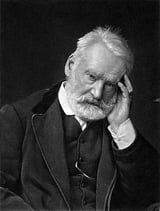
Numerous other séances followed, almost daily and sometimes several times a day. For two and a half years, Victor Hugo, his family, and a few invited guests conversed with the familiar ghosts of the house—the White Lady, the Black Lady, and the Grey Lady—as well as with illustrious figures such as Chateaubriand, Dante, Racine, André Chénier, Lord Byron, Walter Scott, Galileo, Shakespeare, and Molière. To the latter, he put this question:
Thou who didst gather up the cestus from old Shakespeare,
Thou who, beside Othello, didst sculpt the somber Alceste,
Star that shines beneath a double horizon—
Poet in the Louvre, archangel in Heaven, O great Molière!
Thy splendid visit honors my dwelling.
Wilt thou extend to me, on high, thy hospitable hand?
Let the grave open for me in the grass—
I behold without fear the tomb with its eternal shadows;
For I know the body finds there a prison,
But the soul finds there its wings.
But it was not Molière who answered him. The spirit that undertook to reply in the name of the immortal comic assumed the name “Shadow of the Sepulchre” and chastised Hugo in these terms:

O you who seek to know the secret of the dark,
And who, holding high your earthly torch,
Come stealthily, groping through our funeral shadows,
To pry open the vast tomb—
Return to your silence and blow out your candles.
Go back into that night from which you sometimes emerge.
The human eye cannot read eternal things
Over the shoulder of the dead!
The writing medium was Charles Hugo, and neither he nor Vacquerie, who was present, could have improvised such things. As for Victor Hugo, he attended the sessions but never took a seat at the séance table; moreover, he never wished these verses to appear among his works:
“It goes without saying that I have never mingled with my own poetry a single one of those lines that came from the mystery, nor with any of my ideas those ideas. I have always reverently left them to the Unknown, who is their sole author.”
Often the spirits would present themselves as personifications of ideas, of symbols: the idea of drama, of death, of poetry, .....
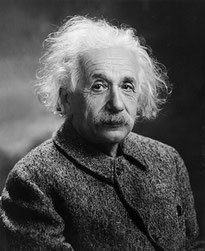
Albert Einstein
The Genius Who Rewrote the Laws of the Universe (5 min)
Albert Einstein, born in Germany in 1879 and who passed away in the United States in 1955, is regarded as one of the greatest scientific geniuses of all time.
His name has become synonymous with intellectual brilliance, and his discoveries profoundly transformed our understanding of the universe.
What truly sets Einstein apart, however, is not only the revolution he sparked in the field of physics, but also his unique way of perceiving the world, his vision of the role of science, and his commitment to social and political causes.
The Emergence of Talent
Albert Einstein grew up in Munich in a middle-class Jewish family. He was not a child prodigy, but he quickly showed particular abilities in mathematics and physics.
Contrary to the image sometimes portrayed of him as an uncompromising genius, Einstein was a rebellious student who disagreed with the rigid approach of the school system, and he struggled with certain subjects such as languages.
Yet from his teenage years, he began to develop innovative ideas about the nature of the world, influenced by the writings of philosophers and scientists such as Immanuel Kant and Isaac Newton.
In 1905, while working as a patent examiner at the Bern Patent Office—a modest position with little prestige—he published a series of articles in the scientific journal Annalen der Physik.
These papers, now known as Einstein’s Annus Mirabilis (or “Miracle Year”), forever changed the scientific landscape.
The Theory of Special Relativity
The first of Einstein’s groundbreaking papers in 1905 introduced his theory of special relativity.
This theory revolutionized our understanding of space and time. According to Einstein, space and time are not separate, fixed entities; rather, they are intimately connected in what we call space-time.
This idea challenged the Newtonian view, which regarded space and time as fixed “containers,” independent from one another.
One of the most famous consequences of special relativity is the equation E = mc², which shows that energy (E) and mass (m) are equivalent and can be transformed into one another.
This discovery had profound implications, particularly for nuclear physics and later developments related to atomic energy.
General Relativity: A New Conception of Gravity
In 1915, Einstein pushed his ideas even further with the theory of general relativity, which reinterprets gravity.
According to him, gravity is not a mysterious force, as Newton had believed, but rather a curvature of space-time caused by the presence of mass and energy.
This curvature influences the motion of objects, which follow curved paths through a distorted space-time.
General relativity profoundly transformed the classical view of the universe and predicted remarkable phenomena, such as the bending of light by massive objects. This prediction was confirmed during a solar eclipse in 1919, propelling Einstein to worldwide fame.
He became an iconic figure of science, and general relativity went on to become one of the pillars of modern physics.
His Contribution to Quantum Physics
While relativity remains his greatest legacy in physics, Einstein also left an indelible mark on the development of quantum mechanics.
In 1905, he explained the photoelectric effect, showing that light can be understood as consisting of particles, or quanta.
This work earned him the Nobel Prize in Physics in 1921 (modern photovoltaic panels are a practical application of this theory).
However, Einstein disagreed with some of the philosophical implications of quantum mechanics, particularly its probabilistic nature.
For him, “God does not play dice with the universe”—a famous remark that captures his skepticism toward certain aspects of quantum theory, even though he acknowledged the validity of its results.
A Man of Convictions
Albert Einstein was not only a theorist but also a man of strong convictions.
Beyond his scientific work, he had a significant impact on the social and political debates of his time. His thinking was always marked by a deep humanism and a strong commitment to civil rights, pacifism, socialism, and social justice.
When he emigrated to the United States in 1933 to flee the Nazi regime in Germany, he became a fervent advocate for the rights of Jews and other persecuted minorities.
He also campaigned against militarism, although paradoxically he signed a letter to President Roosevelt in 1939 warning about the possible development of an atomic bomb.
This letter played a key role in the launch of the Manhattan Project, which eventually led to the creation of the first nuclear weapon.
In his later years, Einstein continued to promote peace and international cooperation. After the Second World War, he became a critic of the Cold War and supported the idea of a world government that could reduce tensions between nations.
He remains a symbol of intellectual engagement—not only for science, but also for human progress.
Einstein’s Legacy
Today, Einstein is a symbol not only of scientific genius, but also of humanity. His legacy—both theoretical and philosophical—remains deeply present in research on relativity, cosmology, particle physics, and many other fields.
His theories have enabled extraordinary advances, from GPS technology to our understanding of black holes, and they continue to fuel debates about the nature of the universe.
But beyond his scientific brilliance, Einstein also stands as a model of insatiable curiosity, constructive doubt, and devotion to truth, whatever the cost.
In this sense, he embodies the human quest for knowledge—an endless journey to understand not only the laws of nature, but also our place in the universe.
The Expansion of the Universe in Einstein’s Work and Its Relation to Spiritism (5 min)
The idea that the universe is expanding is now widely accepted by the scientific community, but this discovery has deep roots in the work of Albert Einstein.
A fascinating aspect of the story is that the expanding universe intersects in intriguing ways with spiritual and philosophical themes, although from a scientific perspective Einstein himself never explicitly addressed connections between his theories and spiritism.
Nevertheless, it is possible to explore how his ideas resonated with certain spiritual concepts of his time.
1. The Expansion of the Universe: From Relativity to Modern Cosmology
Albert Einstein formulated the theory of general relativity in 1915, fundamentally transforming our understanding of gravity and the structure of the universe.
In this theory, gravity is not simply a force that pulls objects toward masses; rather, it is the deformation of space-time caused by the presence of matter and energy.
At first, Einstein did not consider that the universe might be expanding. In his view, the universe had to be static and eternal.
To make his theory compatible with this idea, he introduced a cosmological term into his equations—a factor representing a repulsive force that counteracted gravity, thus keeping the universe in a state of balance, with neither expansion nor contraction.
However, in 1929, the astronomer Edwin Hubble observed that galaxies move away from one another at speeds proportional to their distance, suggesting that the universe is expanding.
Einstein, who had strongly supported the idea of a static universe, later admitted that introducing the cosmological term had been a mistake, famously calling it the “greatest blunder of my life.”
He came to realize that the universe was not fixed, but rather dynamic and evolving.
2. The Relationship with Spiritual Reflection: A Dynamic Vision of the Universe
The idea that the universe is expanding goes far beyond simple physical mechanics: it suggests a dynamic, living universe in constant evolution.
This notion of continuous change over time resonates with certain spiritual and mystical traditions.
Many philosophies—from Hinduism to Taoism—view the universe as a dynamic process in which time, space, and matter are in perpetual transformation. This perspective echoes the idea of a living universe, a cosmic entity evolving through expansion and contraction in endless cycles.
Although Einstein never explicitly spoke about spiritism, it is interesting to note that the discovery of the expanding universe resonated strongly with certain spiritual ideas of his time.
For example, in the early twentieth century, idealism and mysticism were influential philosophical currents among many intellectuals.
Thinkers such as Henri Bergson promoted a conception of the universe as a dynamic flow of creative energy—somewhat similar to the vision of an expanding cosmos that evolves continuously, yet in a mysterious way.
The fact that Einstein revealed a universe that is dynamic and expanding rather than static can therefore be seen as a parallel to these metaphysical conceptions of the universe as a living and evolving phenomenon, in which mind and matter are inseparably linked in a process of continual transformation.
3. The Connection with Spiritism: A Moving Universe and the Quest for the Invisible
Spiritism, which emerged in the 19th century and developed through figures like Allan Kardec, proposed that the spiritual world is in constant interaction with the material world, and that an invisible dimension influences our existence.
While Einstein never directly linked his work in cosmology to spiritism, the way he conceived the universe resonates intriguingly with certain spiritist ideas.
In spiritism, the central notion is that the spirits of the departed can influence the world of the living, and that the material and spiritual realms are interconnected. Communication with the dead—though not scientifically proven—is based on the idea of a dynamic, interconnected universe in which the boundaries between the invisible and the visible are permeable.
Einstein’s general relativity, by reshaping our understanding of gravity, forces, and the structure of the universe, can also be interpreted as a reflection on the invisible and the unknown—what lies beyond our immediate comprehension of physical reality.
The fact that the universe is expanding and continuously evolving reinforces this idea of perpetual motion, a concept that echoes spiritist beliefs, where the spirit is seen as an ever-evolving agent, reincarnating and progressing in a quest toward higher forms of understanding.
4. Parallels with the Unknown and the Mystical
Despite his scientific rationalism, Einstein occasionally expressed a profound admiration for the mystery of the universe.
He often spoke of a “cosmic religiosity,” a fascination with the mysterious order and beauty of the cosmos.
Although he was not religious in the traditional sense, he famously said, “Science without religion is lame, religion without science is blind.”
This remark highlights a kind of mystical respect for the invisible, resonating with spiritual ideas that seek to understand the universe through principles that are unseen and immeasurable, while striving to reconcile both dimensions.
In this context, the idea of the expanding universe can also be seen as a metaphor for the invisible in expansion—the unknown gradually revealed to our understanding.
It can be interpreted as a form of spiritual quest: an expansion of consciousness, self-understanding, and comprehension of the universe, aligning with certain spiritist ideas about spiritual progress and the evolution of the soul.
5. Einstein, the Quest for Truth, and the Spirit
Although Einstein was skeptical of religious or spiritist beliefs, his vision of the universe and the nature of reality—a cosmos that is expanding, mysterious, unpredictable yet coherent—echoes concerns similar to those of spiritists and mystics: seeking to understand the meaning of the universe, going beyond appearances, and searching for hidden truths that are often invisible and incomprehensible, yet real.
One eminent physicist, Paul Epstein, once referred in Einstein’s presence to that solemn moment when a great truth reveals itself to a person.
One evening, Albert was comfortably seated by a window overlooking Bayerischer Platz, absorbed in thought.
“Albert, how did you come to make your discovery?”
“In a vision,” he said. “One morning upon waking, a dream appeared with infinite precision, with its secret units of measurement, structure, distance, time, and space. A puzzle formed in my mind. Suddenly, clearly, the immense map of the universe unfolded before me like a dazzling vision.”
Ultimately, Einstein’s theory of the expanding universe, while a scientific revolution, can also be seen as a modern reflection of the quest for the invisible at the heart of spiritism: a continuous search for what lies beyond our immediate perception.
Even if Einstein never explicitly connected his work to these ideas, his vision of a constantly evolving universe and the importance he placed on the pursuit of truth resonates with universal spiritual concerns.
This account shows that, although Einstein was more a rationalist than a mystic, his discoveries and his vision of the universe have fascinating parallels with spiritual ideas, including those of spiritism.
Jean Cocteau
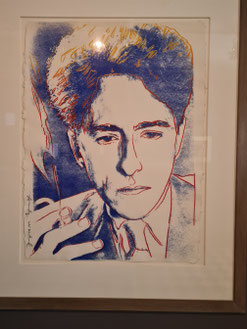
Jean Cocteau and Spiritism (3–4 min)
Jean Cocteau, born in 1889 and passing away in 1963, was a central figure in the French artistic scene of the 20th century. Poet, novelist, filmmaker, illustrator, playwright—he embodied a multifaceted genius, both classical and avant-garde. Cocteau was also deeply fascinated by the invisible, the strange, and the mystical. It is within this blurred space between art and spirituality that his relationship with spiritism is situated.
Spiritism, which gained popularity in Europe at the end of the 19th century, is based on the belief that it is possible to communicate with the dead, often through mediums. This mystical movement attracted many artists seeking inspiration or metaphysical answers. Cocteau, however, did not merely observe it from the sidelines: he incorporated the idea of the afterlife into his thinking, his work, and even his way of living.
He said, “Poets are not like other men. They speak with shadows.” For Cocteau, this statement was more than a metaphor: the afterlife was a reality, a mental and poetic territory that he explored through his creations. His film Orpheus (1950), a modern adaptation of the Greek myth, is a striking example: the main character literally passes through a mirror to enter the world of the dead. This mirror, a symbol of the passage between two worlds, recurs frequently in Cocteau’s work, alongside angels, specters, and voices from elsewhere.
He described himself as a “medium” in a poetic sense: an intermediary between two realities. In some of his writings, he recounted experiences that were almost spiritist—sensing presences, hearing voices, noticing signs. He even claimed that artistic inspiration could come from the beyond, and that artists were more sensitive receivers than others.
Cocteau never practiced spiritism in an academic way, as it was done in the salons of the Belle Époque. For him, the experience was inner and dreamlike, closer to surrealism than ritual. He did not seek to summon spirits for answers; instead, he conversed with them as if they were parts of himself. His entire body of work can be seen as an attempt to pierce the boundaries between the visible and the invisible.
Finally, in his later years, Cocteau remained faithful to this vision: death was not an end, but a passage. A few days before his own passing, he reportedly said, “I remain with you. I am here.” A phrase that resonates strangely, like a promise—or a message from beyond the grave.
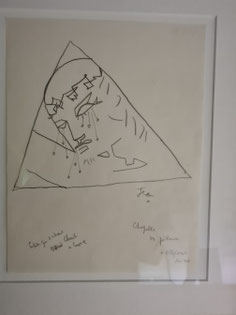
Jean Cocteau and His Relationship with Spiritism (5 min)
His work is fueled by a captivating imagination, where ancient myths, symbolism, surrealism, and reflections on the nature of art intersect. Beyond this richness, Cocteau held a particular passion for metaphysical questions, and more specifically for spiritism—a mystical phenomenon that experienced a significant boom in the 19th century.
Spiritism is a belief based on the idea that one can communicate with the dead, typically through mediums or specialized séances. This mystical and esoteric movement, popularized in France by Allan Kardec, grew extensively in the late 19th century, particularly among artists and intellectuals. Many writers, painters, and musicians were captivated by this quest for the invisible, and among them, Jean Cocteau occupies a singular place.
For Cocteau, spiritism was not merely a pastime or a passing trend, but a true key to accessing a parallel, mysterious, and poetic world. Above all, he saw it as a way to transcend the limits of human perception and to communicate with the beyond. For the artist, the invisible was not simply an object of belief, but a reality that shaped his work and his vision of the world.
Spiritism, a Poetic Influence
Jean Cocteau did not engage in spiritist practices in the strict sense—he did not participate in “table-turning” séances or rituals to communicate with the dead. However, he considered art itself a means of touching the invisible. In his view, poetry, cinema, and even painting allowed him to explore hidden dimensions and reveal concealed truths.
In The White Book (1928), Cocteau wrote: “Poets are not like other men. They speak with shadows.” This phrase perfectly captures his relationship with the invisible forces surrounding him. For Cocteau, artistic inspiration was always tied to a process of reception, like a medium picking up invisible waves—a voice or thought coming from elsewhere. In this conception, poets are intermediaries, transmitters between the world of the living and the dead, or between the tangible world and the beyond.
In 1965, literary critic Robers Kanters wrote: “Jean Cocteau heard the heart of the muses with a measure ahead of his contemporaries.”
In reality, the author of Les Parents Terribles subordinated his inspiration to entities that imposed themselves upon him in the creation of his literary work.
“I have often recounted,” Cocteau said, “the pause that was imposed on me while composing Les Enfants Terribles at the Saint-Cloud clinic, the freedom I had to step away from the role of medium and substitute certain personal notes…
The mysterious force that had been delivering inspiration to me indeed turned its back and withdrew into silence. I had to wait, head bowed, until seventeen days after this pause for the rhythm I sought to resume.
My most important pages, in my view, are those where I did not interfere, where I accepted the role of subordinate, of scribe.”
A year before his death, the man who so uniquely decorated the wedding hall at the town hall of Menton confided to his close friends: “I wrote almost without control, under the dictation of that better Self within us. I believe all true poets are in my case.”
On April 18, 1964, in the weekly magazine MATCH, Jean Pierre Aumond, a renowned actor and friend of Jean Cocteau, recalled that after the premiere of La Machine Infernale on April 10, 1934, at the Théâtre de la Comédie des Champs-Élysées, the author of Les Parents Terribles reportedly said:
“You know what it is. People think one writes a play, but no—I never wrote a line. Everything was dictated to me. The Machine was dictated to me in one night. I obey—I am a poet of… what?”
One writes a play, the actors perform another, and the audience hears a third. Every success is a misunderstanding.
Thirty years later, Cocteau asked Jean Pierre Aumond: “Do you know what became of La Machine Infernale?”
Yes, he replied, it has just been published in the Larousse collection Classiques pour Tous.
The Poet as Medium
Cocteau considered himself a medium in the poetic sense. He saw himself as a receiver, an instrument through which invisible forces manifested. He did not simply aim to create, but to “channel” visions, revelations, or inspirations coming from the beyond. His works—whether poems or films—serve as messengers between two worlds: that of the living and that of the dead, that of the everyday and that of the “shadows.”
Art as Passage
In his final years, Cocteau—still fascinated by death and the beyond—seemed to definitively regard art as a kind of passage to a higher reality. A few days before his death, he reportedly said: “I remain with you. I am here.” This statement, spoken with remarkable serenity, seems both a promise and a farewell—a form of connection with what lies beyond earthly life.
For Cocteau, art and spiritism converge in the same quest for the invisible. His work functions as a kind of medium, allowing one to cross the boundaries of human experience and touch deeper, more mysterious realities. Like a poem to be deciphered, drawing on unknown forces, his work is an invitation to encounter the beyond.
This text can be read in about five minutes and provides a detailed glimpse into Cocteau’s unique relationship with spiritism. It highlights the way the artist intertwines art, poetry, and mysticism, while framing his connection to spiritism in a personal and profoundly creative perspective.
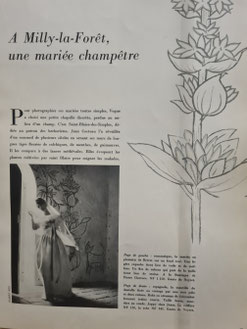
A visit to Milly-la-Forêt, where he spent his final years, offers further insight and is highly recommended.
Ferdinand PAINTER and ENGRAVER Desmoulin
A SPIRITUALIST ARTIST
Born in Javerlac in 1853 and originally destined for a career in medicine, Desmoulin abandoned this path to devote himself to graphic art and became a student at the École des Beaux-Arts, where his teachers included William Bouguereau, Luc-Olivier Merson, and Félix Bracquemond.
There he acquired an impeccable technique in the field of printmaking, particularly in etching.
Desmoulin, however, also proved himself to be a highly skilled portraitist.
Having become the official engraver of the literary and artistic celebrities of his time, he gradually secured a prominent position.
a relatively comfortable material situation. He exhibited at the Salon des Artistes Français in Paris from 1883 to 1890, then at the Société Nationale des Beaux-Arts in Paris from 1891 to 1899, and again in 1903 and from 1906 to 1910.
In his later exhibitions he also presented landscapes inspired by the Netherlands and Venice, where he spent the final years of his life and died in 1914.
A contributor to La Vie Moderne, he formed friendships with Georges Charpentier and Émile Zola. He was made a Knight of the Legion of Honour in 1897.
Rose-Marie Brown

A Medium in the Service of Celestial Music Rosemary Brown, born in England in 1916, is one of the most fascinating figures in the world of twentieth-century mediums.
Not only is she renowned for her extraordinary spiritual abilities, but she also made a unique contribution to the world of classical music. Rosemary Brown’s story is deeply shaped by her experiences with the spirits of celebrated composers such as Frédéric Chopin, Ludwig van Beethoven, Franz Liszt, and Claude Debussy, who, according to her, dictated musical works to her from beyond the grave.
Her story is both a testament to the influence of spiritualism in the world of art and an exploration of the relationship between the unseen and the creative process.
Far from being limited to spectacular phenomena or mere apparitions, her spiritual experiences offer a remarkable insight for musicians, mediums, and anyone interested in the connections between the afterlife and the material world.
The Beginning of the Story: An Encounter with the Unseen
Rosemary Brown came from a modest background. In the late 1950s, while living in London, she began receiving spiritual messages. At the time, she had no prior experience with spiritualism, but a particular event would change her life: one night, while going through an emotionally difficult period, she sensed the presence of a spirit who offered her comfort.
This spirit identified himself as Chopin and began communicating with her. At first, Rosemary Brown believed it was merely her imagination or a dream. However, the phenomenon became increasingly undeniable.
Soon after this encounter, she began hearing melodies, harmonies, and musical passages that she had never learned and could never have composed on her own. She transcribed these works and identified them as previously unwritten pieces by renowned composers, particularly Chopin. From that moment on, she realized that she was in contact with the world beyond and that these spirits were seeking to convey messages through her music.
A Relationship with the Great Composers of the Past
Over the years, other renowned composers began to make themselves known through Rosemary Brown, including Beethoven, Liszt, Debussy, and Schubert. What makes her case unique is that these composers, despite having died long ago, allegedly dictated previously unknown works to her.
According to her accounts, they transmitted scores and musical compositions that she then transcribed onto paper. She described these sessions as genuine spiritual dictations, during which the composers shared their inspiration with her.
The pieces she received were, she claimed, authentic and bore the distinctive stylistic signature of each composer.
For example, the works attributed to Chopin displayed the elegance and sensitivity characteristic of the Polish composer, while those attributed to Beethoven possessed the strength and depth that define his genius.
Rosemary Brown’s case is remarkable in that these musical dictations appeared to originate not from her own personal inspiration, but from a direct connection with some of the greatest figures in classical music.
She stated that at the beginning of these encounters, she received musical ideas only as mental impressions.
Over time, however, she became able to transcribe entire pieces with astonishing accuracy. The melodies were sometimes highly complex and remarkably beautiful, despite having been composed, according to her, by spirits separated from the present by the passage of time.
The Process of Spiritual Composition
According to Rosemary Brown, the process through which she received these spiritual dictations was similar to mediumistic communication.
The composers did not manifest physically; instead, they transmitted subtle vibrations that she perceived in her role as a medium. She remained focused on the sensations she experienced and was able to translate these messages from beyond into musical form.
The spirits of these celebrated composers seemed eager to continue their work even after death, and their motivation, according to Brown, was to contribute to the advancement and enrichment of humanity.
The pieces attributed to these spirits have been performed by contemporary musicians and composers.
Although some have questioned their authenticity, many listeners and observers believe they bear the distinctive stylistic hallmarks of the great masters.
The messages conveyed by these composers extended far beyond music.
They also spoke to her about their views on life, death, and the nature of the universe. According to Rosemary, these exchanges enabled her to gain a deeper understanding of the spiritual laws governing the afterlife and to develop a more profound insight into the nature of existence beyond death.
Reception and Criticism
Rosemary Brown’s case attracted considerable interest within spiritualist circles as well as among musicians.
Many regarded her as a messenger of spiritual communications, capable of conveying a higher form of art and a source of cosmic inspiration.
Her works were performed and recorded by musicians, and some critics acknowledged the beauty and depth of the compositions she received, even while questioning their alleged spiritual origin.
At the same time, skepticism remained strong. Many scientists and rationalists rejected the notion that deceased composers could genuinely transmit music through a medium.
Nevertheless, some observers emphasized the role of subjectivity in such phenomena.
From this perspective, Rosemary Brown could be viewed as a medium producing music through an inspired state of consciousness, although certain aspects of her case appeared to go beyond what might ordinarily be described as personal inspiration.
Rosemary Brown and the Spiritual Quest
Beyond music, Rosemary Brown represents a bridge between worlds—a medium seeking to give a voice to those who had passed on yet who, according to her, still had messages to convey.
Her experience serves as a vivid example of what might be called creative spirituality, where art becomes a channel of communication with the unseen.
She did not seek to promote herself or to build a personal reputation through her works.
Rather, her endeavor was above all a spiritual quest, driven by a desire to understand and share ideas that could not be perceived through ordinary senses. Through her music, she sought to offer the world compositions from another time, allowing modern audiences to connect with the minds of those who had left a lasting mark on the history of classical music.
Conclusion:
A Musical Mediumship Rosemary Brown’s story is both that of an extraordinary medium and of a profound connection with the great masters of music.
Her experiences with the spirits of renowned composers opened a new path for spiritual art, one in which the unseen and the creative converge in an act of transcendent transmission.
Although her story has been met with criticism and skepticism, it remains a fascinating example of the influence of spiritualism on artistic creation and of an openness to another dimension of human existence.
This account offers an opportunity to explore Rosemary Brown’s unique journey, her remarkable musical mediumship, and the central role that spiritualism played in both her life and her artistic work.
Adrienne Bolland

Adrienne Bolland, born on November 25, 1895, in Arcueil and deceased on March 18, 1975, in Paris, was a French aviator and member of the Resistance, best known as the first woman to fly across the Andes mountain range.
As she later revealed to the press in 1951, she believed that she owed her survival to a warning delivered by a woman sent by a medium while she was preparing to take the train to Mendoza.
According to her account, this woman urged her that, when flying over an oyster-shaped lake, she should take a dangerous passage to the left, facing the mountain, rather than the route to the right.
This guidance was said to have played a decisive role in the success of her flight. Source: “The Adrienne Bolland Case” (archived article), les-archives-du-savoir-perdu.webnode.fr, May 9, 2015.
DAREDEVIL AND FEARLESS
In 1921, Adrienne Bolland crossed the Andes mountain range in an aging 80-horsepower biplane.
In the autumn of 1919, in a Montparnasse restaurant, a young woman who had just lost a considerable sum of money turned to her friends and declared: “That’s it. I’m finished with horse racing... I’m going into aviation!”
A man seated at a nearby table, amused by her declaration, approached her.
“You want to learn to fly? Your timing couldn’t be better.
I have well-connected friends who can arrange for the first ten aspiring aviators to join Caudron and receive their training under the best possible conditions. Today is Sunday; call me on Wednesday with your decision.”
That is how Adrienne Bolland, born on November 25, 1895, in Arcueil-Cachan, became a student pilot at the Caudron flying school in Le Crotoy on November 16, 1919.
A week later, she took her first flight as a passenger. She was frightened, and the turns made her feel sick, but she already displayed a natural aptitude for flying. When she was asked after landing how the flight had gone, she replied: “Very well!... And why shouldn’t it have gone very well?”

On January 29, 1920—just two months after that first flight—the exceptionally gifted student, known for her strong-willed personality, earned her pilot’s license. René Caudron, who had taken notice of her talent, hired her immediately. For months, she ferried aircraft from place to place, but she dreamed of owning a plane of her own.
When she sought her employer’s advice, he told her, “The day you perform a loop, the aircraft is yours.” Nothing seemed beyond the determination of Adrienne. A few days later, she not only completed a loop once, but twice. The Caudron G.3 F-ABEW was now hers!
During the week, she carried on with her work, and on Sundays she took part in air shows. Yet this life did not fully satisfy her. It was then that she presented her boldest ambition to Caudron: to cross the Andes Mountains. Though he did not actively encourage the idea, neither did he oppose it.
“He wasn’t unhappy to see me leave,” the aviator later recalled. “With my darn stubborn temperament, I was causing a commotion wherever I went!”
In the meantime, she traveled to England to demonstrate a Caudron aircraft; naturally, a crossing of the English Channel was part of the itinerary. However, since she had good friends in Brussels, she went to visit them, and the evening stretched on until very late.
The next morning, when breakfast was brought up to her room, a headline in the newspaper caught her eye: “Woman Aviator Missing Over the Channel.” Adrienne thought to herself, “Well, look at that—another woman must have decided to make the crossing at the same time as I did...”
When she arrived at the airfield, everyone was waiting for her.
“We’ve been looking for you everywhere!”
While she had been sound asleep all night, the French Navy had been searching the Channel for her!...
With not a penny left to get back to Paris, she had no choice but to ask René Caudron for money. After initially refusing, he finally gave in when she threatened him:
“If you don’t send me some money, I’ll sell your crate!”